
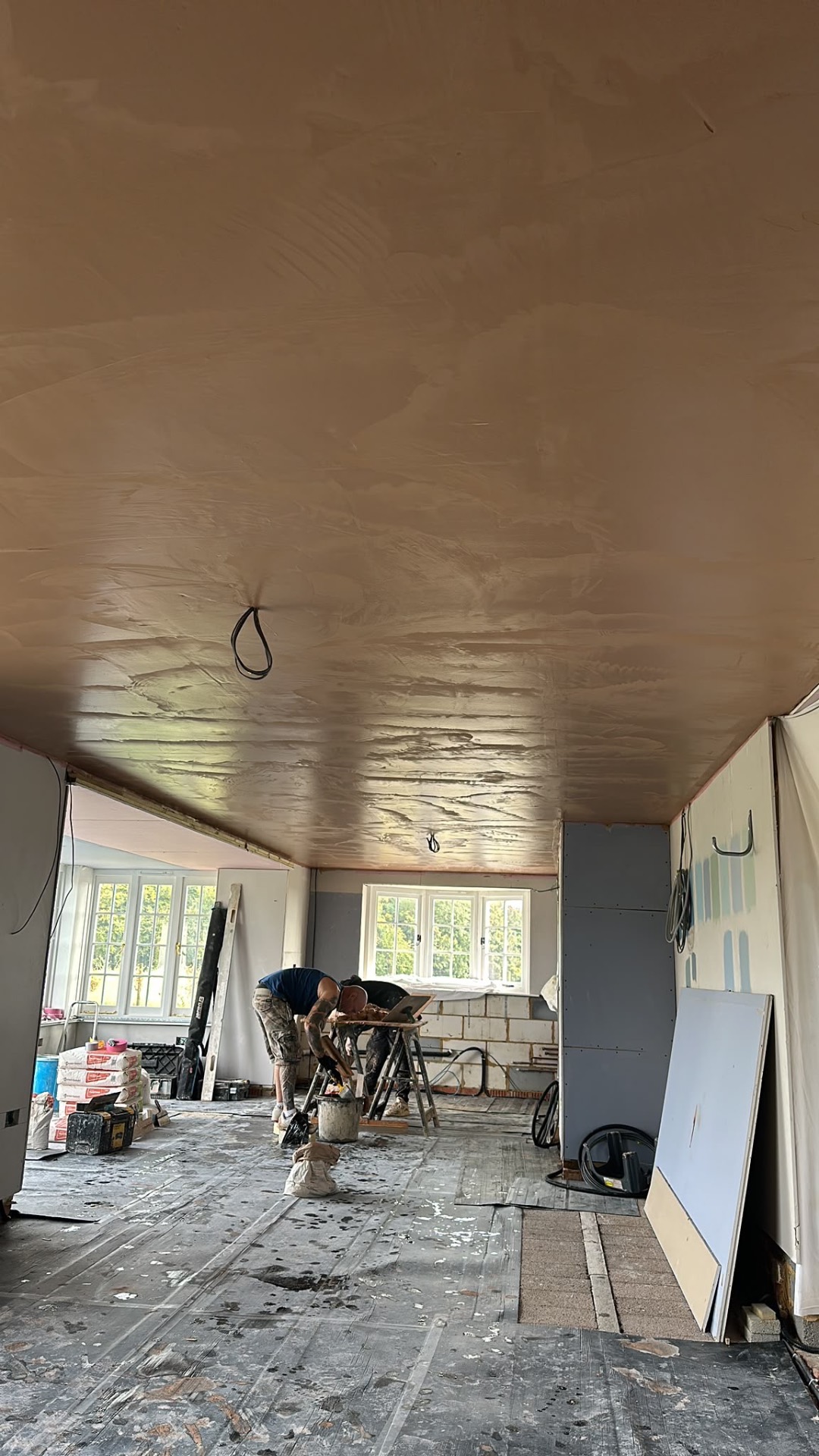
Where plastering is used
Plastering applies to almost any internal surface that will be painted, papered or tiled: new stud partitions, blockwork in extensions, old lath-and-plaster ceilings nearing the end of their life, and walls damaged by previous DIY work or water ingress. New-build plasterboard needs a suitable skim or taped-and-jointed finish before it can be decorated, while solid masonry walls in older Aldershot houses may need a different build-up depending on whether they were originally finished in lime or modern gypsum plaster.
The right approach depends on the substrate. Plasterboard, blockwork, brick and existing hard plaster all take finish coats differently, and mixing techniques without understanding the base can lead to poor adhesion or an uneven surface later on.
Common reasons walls and ceilings need attention
Cracking, bulging or crumbling plaster is rarely just cosmetic. Hairline cracks in a gypsum skim are often movement-related and can usually be made good as part of a repair, but larger cracks, soft patches, or plaster that sounds hollow when tapped can point to a failed bond between the plaster and the background, historic water damage, or settlement in the building structure.
Where damp is present, the underlying cause needs to be understood before any plastering work goes ahead, because replastering over an unresolved damp source will only mask the problem temporarily. Common causes in Hampshire properties include rising damp from a failed or bridged damp-proof course, penetrating damp through defective pointing, render or roof details, condensation from poor ventilation in bathrooms and kitchens, and leaking pipework or guttering. Establishing which of these applies, sometimes with input from a damp specialist, should come before replastering is scheduled.
Preparing a property for plastering work
Good preparation protects the finished result. This typically includes removing loose or failing plaster back to a sound edge, raking out and repairing any cracks in the background, removing wallpaper rather than skimming over it, and checking that any electrical cables or sockets in the wall are safe to work around. Dust sheets and floor protection are standard, and furniture is usually moved clear of the working area.
If a wall or ceiling has an existing textured coating, such as an Artex-style finish, it should not be sanded, scraped or disturbed without first having it assessed, since textured coatings applied before 2000 can contain asbestos. A competent assessment, and professional removal if needed, should happen before any plastering work begins on that surface.
What to expect during the job
Most plastering jobs follow a similar rhythm: protecting the room, preparing the background, applying a base coat where needed, then a finishing skim trowelled to a smooth surface. Drying times vary with the plaster type, room temperature, humidity and ventilation, so a realistic timeframe is usually agreed before work starts rather than promised in advance regardless of conditions.
Freshly plastered surfaces need time to dry out fully before painting, and this can take longer in colder months or in rooms with poor airflow. Rushing decoration onto plaster that hasn't dried can trap moisture and cause problems with paint adhesion later.
Plastering around Aldershot's housing stock
Properties across Aldershot and nearby Hampshire and Surrey communities include older terraces, post-war homes and newer developments. Each era brings different plastering considerations: older solid-wall properties may still have lime-based plaster beneath later gypsum skims, while post-war homes are more likely to be built with plasterboard or blockwork finished conventionally.
Understanding the age and construction of a property helps determine the right materials and technique, which is why an on-site look at the actual walls and ceilings is more useful than guessing from a property's age alone.
Getting a quotation
Because plastering needs vary so much between a small repair and a full house re-skim, quotations are based on an in-person or photo-led assessment of the specific rooms involved, the condition of the existing surfaces, and access considerations. This also allows any underlying issues, such as damp or substrate damage, to be flagged before work is agreed rather than discovered partway through the job.
To arrange an assessment or ask a question about a specific property in Aldershot or the surrounding Hampshire and Surrey area, contact PlastererAldershot on 07881 365851.