
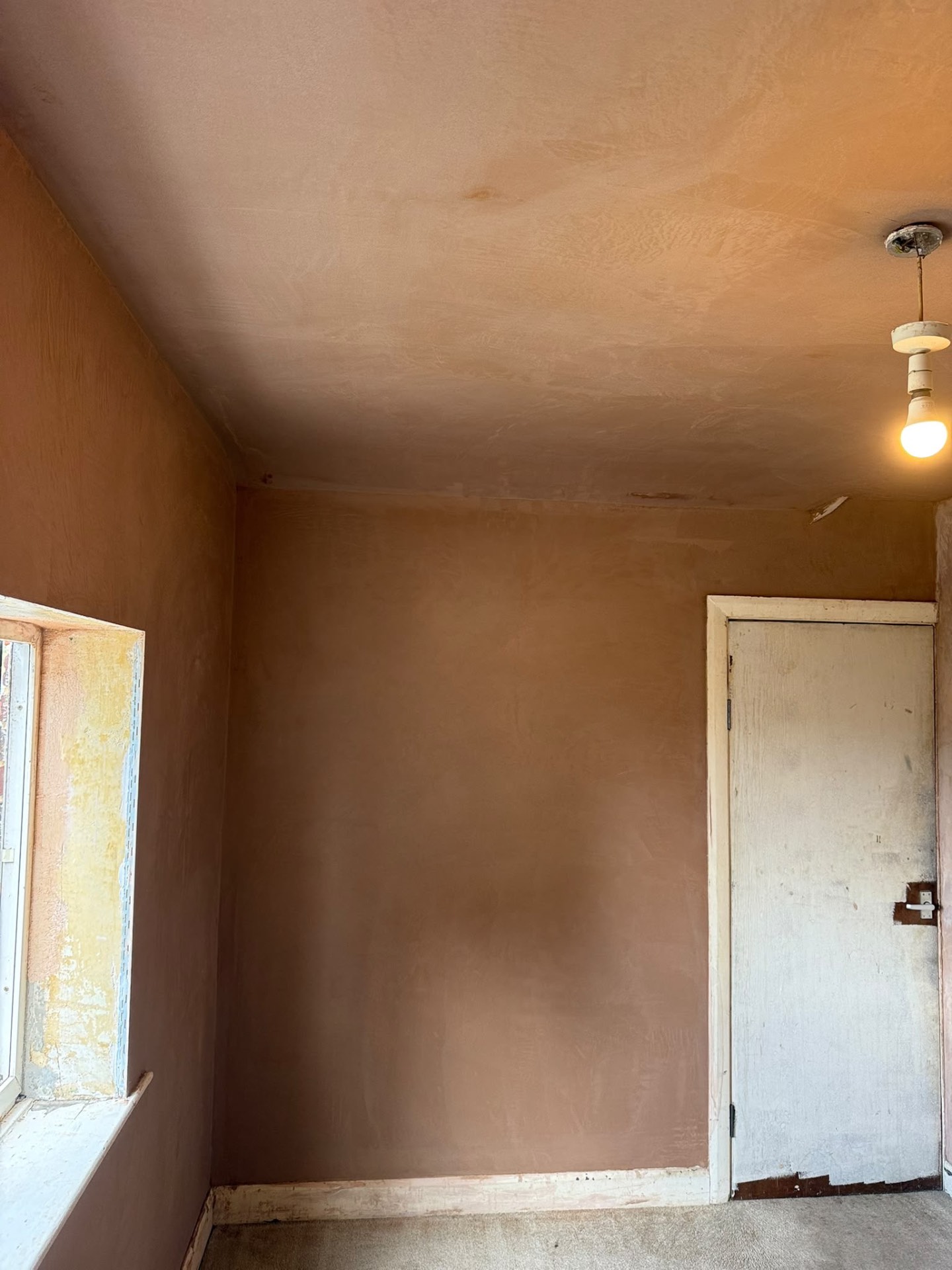
Where a backing coat is needed
Exposed brick or blockwork, deeper repairs and uneven backgrounds may need a base coat before skimming. The depth and material depend on the substrate, existing finishes and manufacturer’s requirements. A backing coat should not be used to conceal loose masonry or unresolved structural damage.
Moisture and material compatibility
Investigate leaks, staining and damp before specifying a new wall build-up. Older solid walls may need lime-based, moisture-permeable materials rather than a standard gypsum or cement approach. In bathrooms, agree the tile backing and waterproofing system with the installer; plaster alone is not waterproofing.
The typical process
Protect the surrounding room, remove only assessed and appropriate failing material, prepare the background and control suction according to the chosen system. Base coats establish a suitable level and key for subsequent coats. Allow the prescribed setting or curing stages rather than rushing straight into the finish.
Quotations and decoration
Call 07881 365851 to discuss exposed masonry, room sizes and the desired finish. An assessment helps identify the preparation, coat build-up and junctions with existing work. The surface needs appropriate drying or curing before decoration, with guidance based on the selected materials rather than a fixed number of days.