
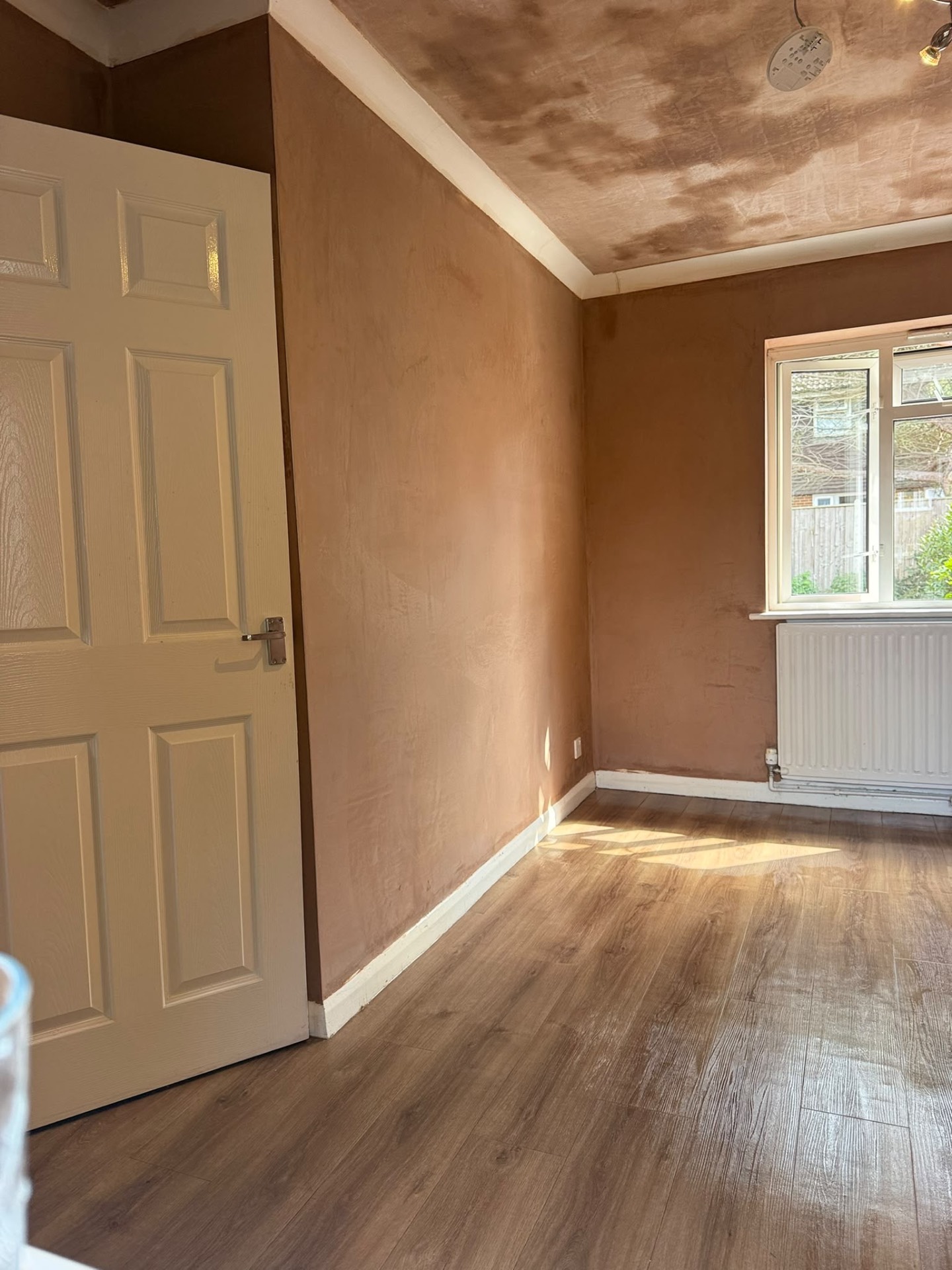
Typical applications for wall plastering
Wall plastering is used for new stud or blockwork partitions that need a skim before decorating, for walls where old plaster has failed or been removed, for making good after rewiring or replumbing chases have been cut into a wall, and for refreshing walls that have had wallpaper stripped and the surface beneath is uneven or damaged. It's also used where a wall has been patch-repaired multiple times and the surface has become inconsistent in texture or level.
In each case the technique varies slightly: a full skim is different from a localised patch repair, and blending a repair into surrounding original plaster takes more care than skimming an entire new surface, since the join needs to be feather-edged so it doesn't show once painted.
Benefits of properly finished walls
A well-plastered wall gives a flat, even surface that takes paint or wallpaper consistently, without the shadowing or texture variation that shows up under certain lighting. It also provides a sound base for fittings, from shelving to kitchen units, and reduces the likelihood of future cracking if the preparation beneath has been done properly.
Beyond appearance, plastering can also help regulate the internal surface of a wall by providing a consistent, even layer over blockwork or brick, which is one reason gypsum and lime plasters are both still widely used in different contexts.
Preparing walls before plastering
Preparation starts with identifying what's actually on the wall already. Wallpaper is removed rather than plastered over, loose or hollow-sounding areas of old plaster are cut back to a firm edge, and any damp staining is investigated rather than simply covered. Skirting boards, switches and sockets are usually masked or removed where practical, and a PVA or appropriate bonding agent may be used on absorbent backgrounds to control suction.
Where a wall shows signs of rising damp, such as staining or a tide mark low on the wall, or penetrating damp from an external defect, these issues point to a source that needs addressing separately rather than a reason to simply apply more plaster. Replastering over an active damp problem tends to produce early plaster failure and is avoided where possible until the cause is dealt with.
What to expect on the day
A typical wall plastering visit involves protecting the floor and adjacent surfaces, preparing the wall as outlined above, applying the appropriate coats for the substrate, and trowelling the finish coat to a smooth, flat surface. For larger rooms or multiple walls, work may be scheduled over more than one visit to allow coats to set appropriately between stages.
Newly skimmed walls need adequate time to dry before painting. This varies with room ventilation, the time of year, and how thick the plaster coat is, and is something worth discussing when scheduling decoration work around the plastering.
Considerations for Aldershot properties
In Aldershot's older terraced streets and converted properties, solid brick walls are common, and some may still carry original lime plaster beneath later layers. In newer-build areas, stud and blockwork partitions finished with plasterboard are standard. Each construction type behaves differently in terms of moisture movement and how new plaster bonds to it, so identifying the wall build-up before quoting or starting work avoids assumptions based on the general age of the property.
A damp patch needs to be assessed on its own evidence rather than attributed to a property’s location. Leaking gutters, plumbing faults, external ground levels and condensation are among the possibilities. A nearby river or rural setting does not establish the cause. The wall construction and actual moisture source should be investigated before a new plaster finish is specified.
Arranging a quotation
Because wall condition varies so much even within the same property, an assessment of the specific walls involved, including their current finish, any visible damage, and access, helps establish the scope of a quotation. This allows any damp or structural concerns to be raised upfront.
To discuss a wall plastering job in Aldershot or nearby, call PlastererAldershot on 07881 365851.