
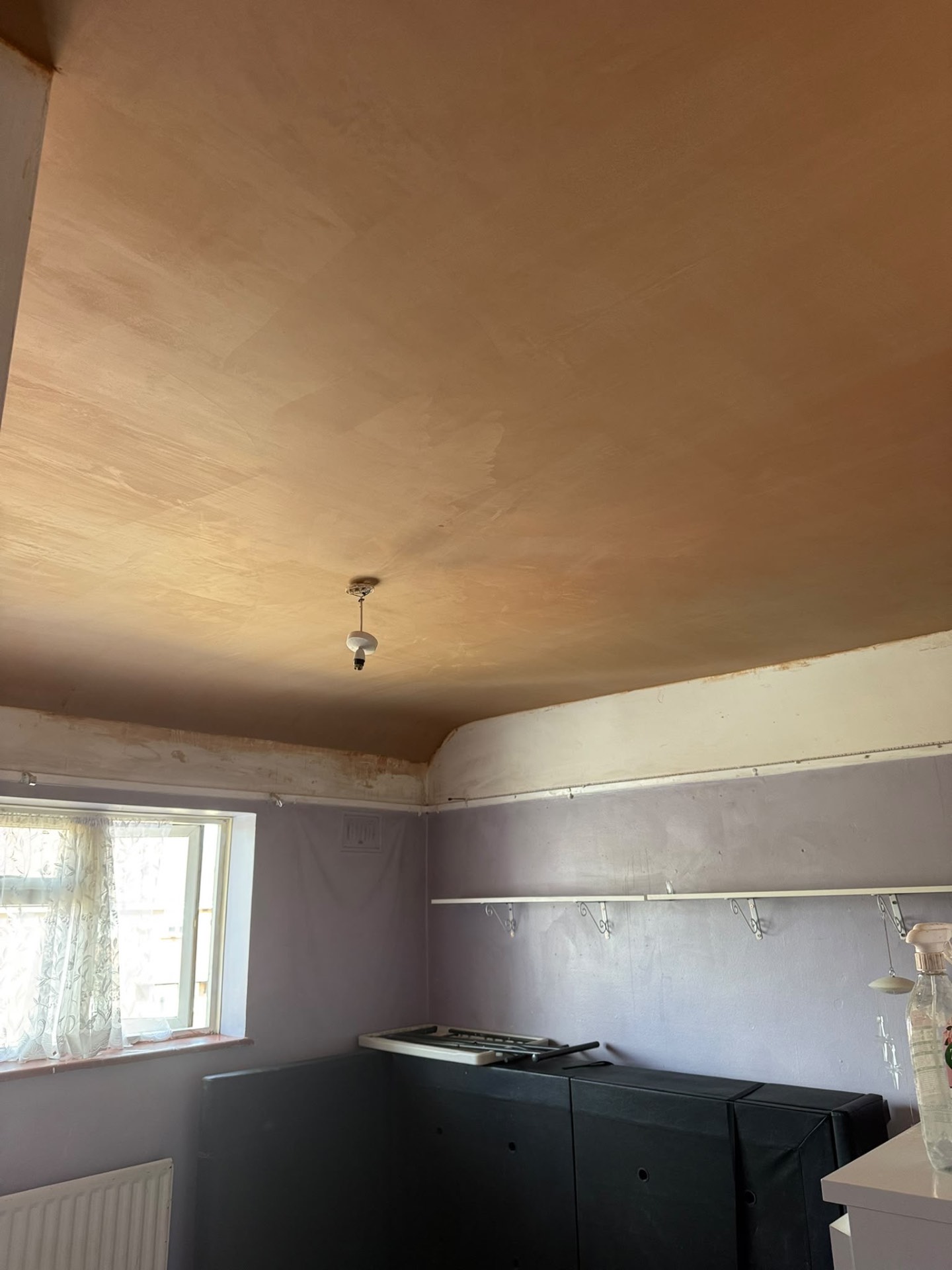
When ceiling plastering is needed
Ceilings are plastered or re-plastered for several reasons: finishing new plasterboard after a loft conversion or extension, replacing an old lath-and-plaster ceiling that has deteriorated, repairing cracking or sagging in an existing ceiling, and making good after electrical or insulation work has disturbed the surface above.
Sagging or bulging ceilings deserve particular attention, since this can indicate that the plaster has detached from its background, whether that's lath, plasterboard or a mesh backing, and in more serious cases it can be a sign of a structural or moisture issue above the ceiling rather than simply worn-out plaster.
Why ceilings crack and what it can mean
Not every ceiling crack is a serious concern. Fine hairline cracks along joints or in the middle of a ceiling are often the result of normal building movement, shrinkage, or minor settlement, and are commonly repaired as routine maintenance. However, cracks that are wide, growing, running in a stepped pattern, or accompanied by sagging, discolouration or a stained patch, point to something that should be investigated rather than simply skimmed over.
Possible underlying causes include water ingress from a roof leak, a leaking pipe or overflow in the floor above, movement in the joists supporting the ceiling, or in older properties, deterioration of the timber laths that the original plaster keys into. Where a leak or ongoing water source is suspected, that needs to be traced and resolved before the ceiling is replastered, since replastering over active moisture will not hold and can mask a problem that's getting worse out of sight.
Preparing a ceiling for plastering
Preparation includes clearing the room below, protecting flooring and furniture (ceiling work is messier than wall work since debris and dust fall downward), removing light fittings or having them made safe by an electrician if needed, and assessing whether the existing ceiling needs to come down entirely or can be skimmed over.
Older ceilings with a textured coating should not be scraped, sanded or disturbed without an assessment first, since coatings applied before 2000 can contain asbestos. This applies particularly to older lath-and-plaster ceilings in Aldershot's period properties, where original finishes or later textured overlays may still be present and should be checked before any removal work begins.
What the process typically involves
Where a ceiling is sound, a skim coat may be enough to refresh the surface. Where plaster has failed, or the ceiling is being newly boarded after other works, the process involves fixing plasterboard to the joists or existing structure before applying base and finish coats. Working overhead is more physically demanding and generally takes longer per square metre than wall work, which is reflected in how ceiling jobs are scheduled.
As with walls, newly skimmed ceilings need time to dry out before decoration, and ventilation in the room makes a noticeable difference to how quickly that happens, particularly in bathrooms and kitchens where ambient moisture is already higher.
Ceiling plastering in older and converted Aldershot homes
Many properties in and around Aldershot, particularly older terraces and converted houses, were originally built with lath-and-plaster ceilings. These can last a long time but do eventually reach a point where the plaster has lost its key to the laths and the ceiling needs replacing rather than patching. Loft conversions and extensions across the town also generate a steady need for new ceiling plastering, usually on plasterboard rather than lath.
In each case, an on-site look at the ceiling construction and condition is the most reliable way to judge whether a repair, a full skim, or a replacement is the appropriate route.
Getting a quotation
Ceiling quotations take into account the size and height of the room, the condition and type of the existing ceiling, access for scaffolding or towers where needed, and whether any preparatory work such as electrical isolation is required.
To arrange a ceiling assessment in Aldershot or the surrounding area, call PlastererAldershot on 07881 365851.