
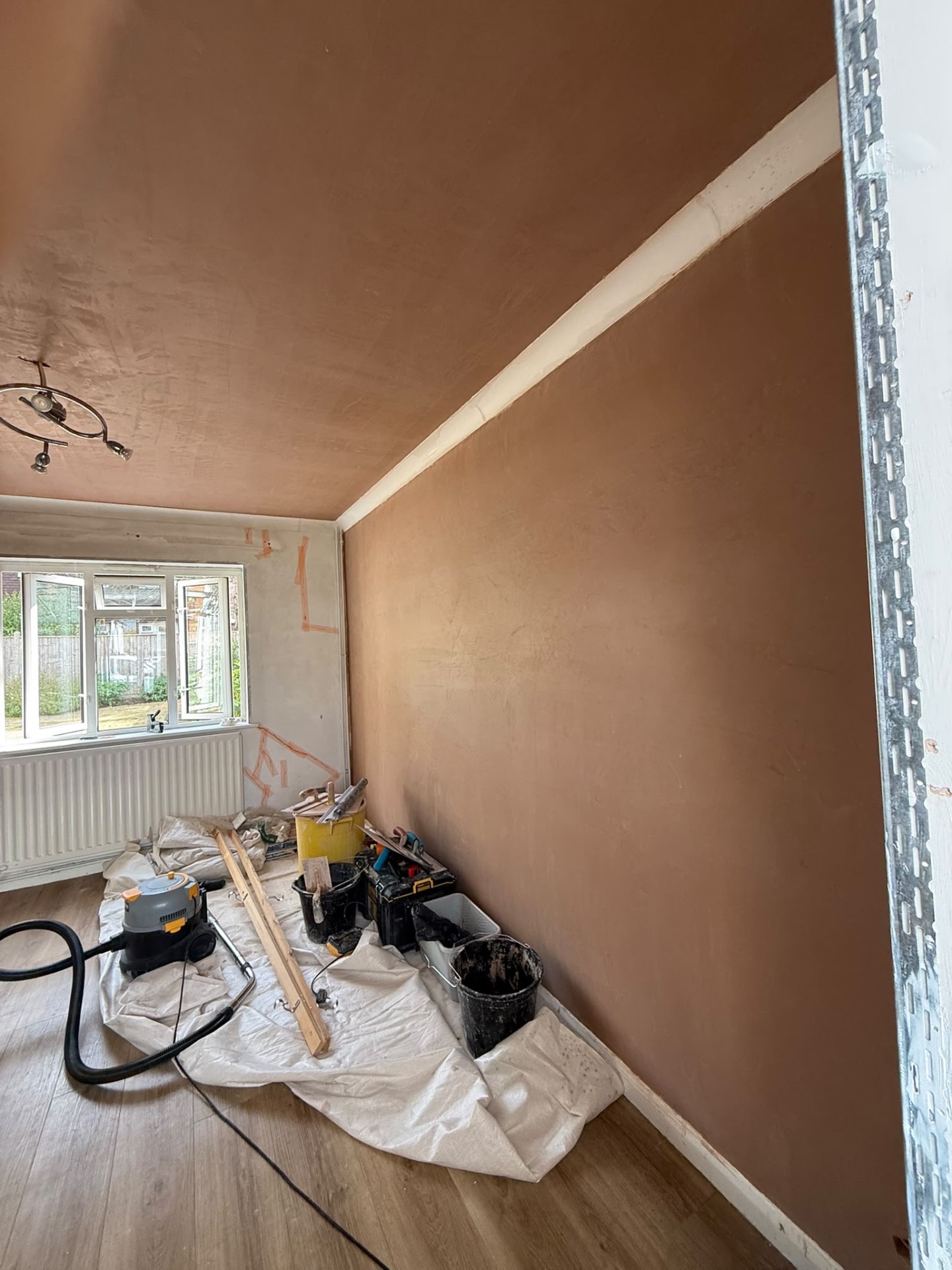
When a skim coat is the right solution
Skimming is typically used over new plasterboard in extensions, loft conversions and new partitions, over existing plaster that is sound but worn, cracked in a minor way, or uneven in texture, and as part of making good after small-scale repairs such as patching around a new socket or fixing a hairline crack. It's a lighter-touch job than a full re-plaster, which involves removing and replacing the plaster entirely.
Skimming is not always the right fix, though. If the background plaster is loose, hollow-sounding, crumbling, or affected by damp, a skim coat applied on top is unlikely to hold properly and the underlying problem will usually reappear through the new surface before long.
Benefits of a quality skim finish
A good skim coat gives a flat, consistent surface that takes paint evenly, without flashing or texture differences that become obvious under raking light from windows or downlights. It also provides a clean base for wallpaper, where even small surface irregularities can show through once paper is hung.
Skimming existing walls or ceilings, where the background allows for it, is often a more efficient way to refresh a tired surface than stripping back to bare masonry or board, provided the background is genuinely sound enough to support it. It's also worth considering how a skimmed surface will age in a room with higher moisture levels, such as a bathroom or kitchen, where ventilation and extraction play a part in how well a new skim finish holds up over time.
Assessing whether skimming is suitable
Before skimming, the background is checked for adhesion (tapping to listen for hollow sounds), for dampness (visible staining, a musty smell, or a damp meter reading where appropriate), and for any loose or flaking material that needs removing first. Old wallpaper is always stripped rather than skimmed over, as it won't provide a stable key for new plaster.
Where damp is suspected, understanding the cause matters more than treating the symptom. Rising damp from a compromised damp-proof course, penetrating damp from external defects such as cracked render or poor pointing, and condensation from inadequate ventilation are all common causes in Hampshire homes, and each needs a different remedy before skimming is worthwhile.
Preparing a room for skimming work
Preparation typically includes covering floors and furniture, removing fixtures where needed, and making sure the surface to be skimmed is clean, dust-free and appropriately primed depending on the background material, since plasterboard and existing plaster take suction differently and may need different treatment before the skim goes on.
If an existing surface has a textured coating, this should be assessed before any attempt is made to sand or remove it, because coatings from before 2000 can contain asbestos, and disturbing them without assessment is not advisable. In rooms with an active damp problem or very poor ventilation, it is often better to resolve that issue first, since even a well-applied skim coat will not stay sound if the moisture causing the original damage is still present behind it.
What to expect during and after skimming
Skimming is usually a quicker process than a full re-plaster, often completed within a day or two for a typical room depending on size and the number of coats required. The finish coat is applied thinly and trowelled to a smooth surface, then left to dry before decoration.
Drying time depends on room temperature, ventilation and the thickness of the coat applied. Painting too soon onto a skim that hasn't fully dried can lead to patchy paint absorption, so it's worth allowing adequate time rather than rushing straight into decorating.
Quotations for skimming work
Because skimming can range from a single wall touch-up to a whole-house refresh, quotations are based on an assessment of the specific rooms, their current surface condition, and whether any preparatory repairs are needed first.
To ask about a skimming job anywhere in Aldershot, call PlastererAldershot on 07881 365851.