
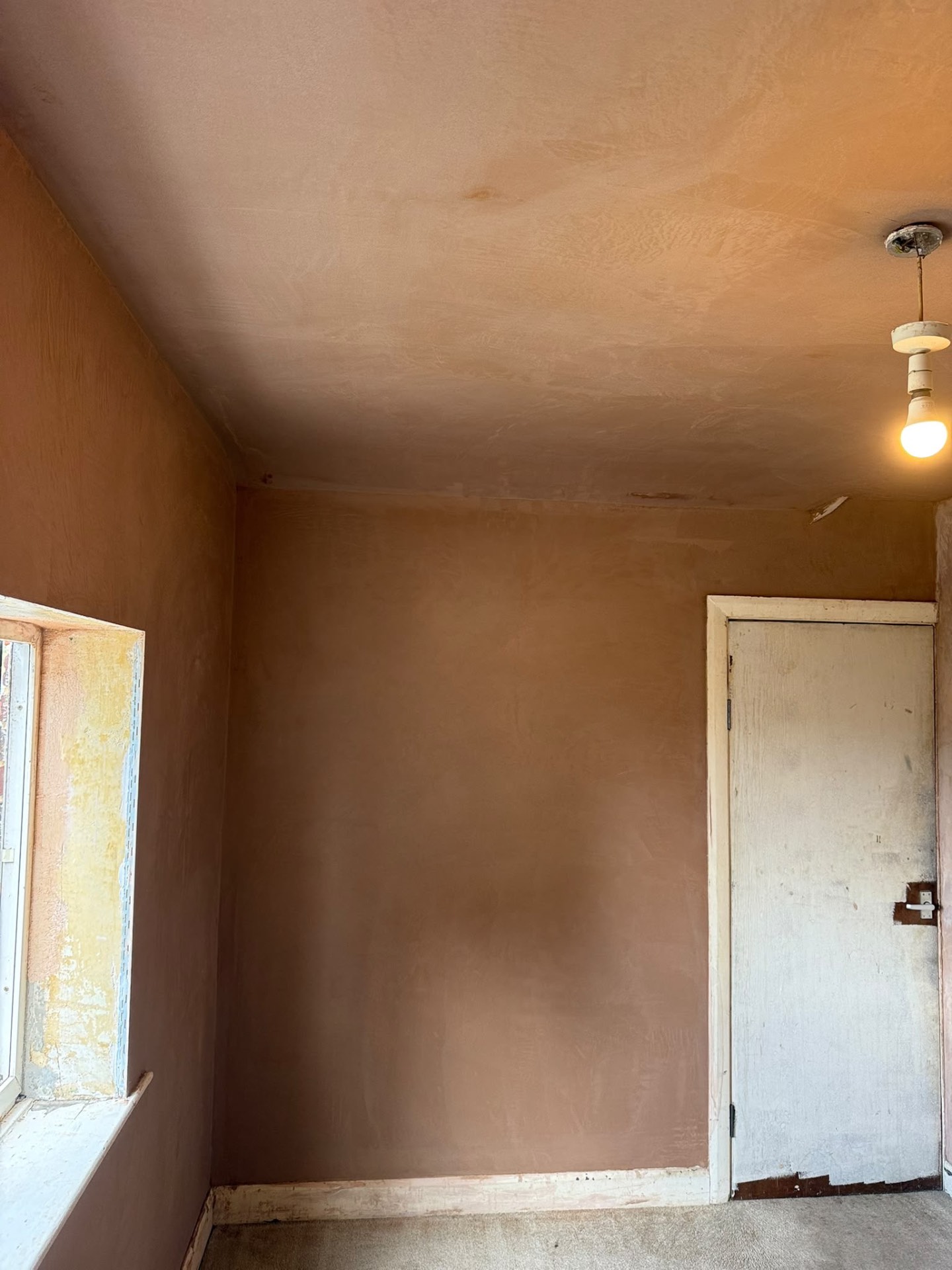
Common types of plaster damage
Typical repair jobs include hairline cracking from normal building movement, larger cracks around doorways and windows where structural movement is more pronounced, holes left after removing fixtures or carrying out plumbing and electrical work, blown or crumbling plaster caused by damp, and impact damage from knocks or furniture moves.
The appropriate repair depends on the cause and extent of the damage. A single hairline crack can often be filled and skimmed locally, while an area of blown plaster usually needs to be cut back to sound material before a new patch is applied, so that the repair bonds properly rather than sitting loosely on top of a failing base.
Understanding what's causing the damage
Cracking and plaster failure are often symptoms of something else happening in the building, and treating only the visible plaster without understanding the cause can mean the same problem reappears. Common underlying issues include: settlement or minor movement in the building structure, particularly around extensions or where a property has had foundation work in the past; damp from a failed damp-proof course, penetrating damp through external defects, or condensation in poorly ventilated rooms; and historic use of different plaster types on the same wall, which can behave differently as they age.
Where plaster is blown or crumbling in a pattern that follows a particular height on a wall, such as low down along an external wall, this is often consistent with rising damp or a damp-proof course issue and is worth having assessed rather than simply re-plastering over, since the moisture will usually affect the new plaster in the same way given time.
Assessing a repair before starting work
A proper assessment involves checking the extent of the damage, tapping the surrounding area to establish how much further the problem extends beyond what's visibly damaged, and looking for a pattern or cause rather than just the immediate area needing repair. This sometimes reveals that a repair needs to be larger than the obviously damaged patch, because adjoining plaster has also lost its bond to the wall even though it looks sound on the surface.
Where a textured coating is present on the surface to be repaired, it should not be sanded, scraped or disturbed without assessment first, as coatings applied before 2000 can contain asbestos, and this is a consideration on many older properties in and around Aldershot.
How repairs are carried out
Repairs typically involve cutting back damaged plaster to a sound, stable edge, preparing the exposed background (which might be brick, block, lath, or plasterboard depending on the property), and building the patch back up in appropriate coats to match the surrounding wall thickness, before a finish skim is feathered into the existing surface so the repair isn't visible once painted.
Matching the texture and flatness of the surrounding plaster takes care, particularly on older or uneven walls, since a repair that's technically sound but visually obvious under certain lighting isn't a fully satisfactory result.
What to expect from a repair visit
Smaller repairs can often be completed in a single visit, while larger repairs, or those requiring multiple coats to build up thickness, may need more than one visit to allow proper drying between stages. As with any plastering work, the repaired area needs time to dry before painting, and trying to decorate too soon can show up as a slightly different sheen or colour until the plaster has fully dried out.
If a repair has been necessitated by an ongoing issue such as a leak, it's generally worth resolving that issue before or alongside the plaster repair, rather than repairing the plaster first and risking the same damage recurring.
Quotations for repair work
Because repairs vary enormously in scale, from a single small patch to multiple areas across a property, quotations are based on an assessment of the specific damage, its likely cause, and the access involved.
To get a repair assessed in Aldershot or the surrounding area, call PlastererAldershot on 07881 365851.