
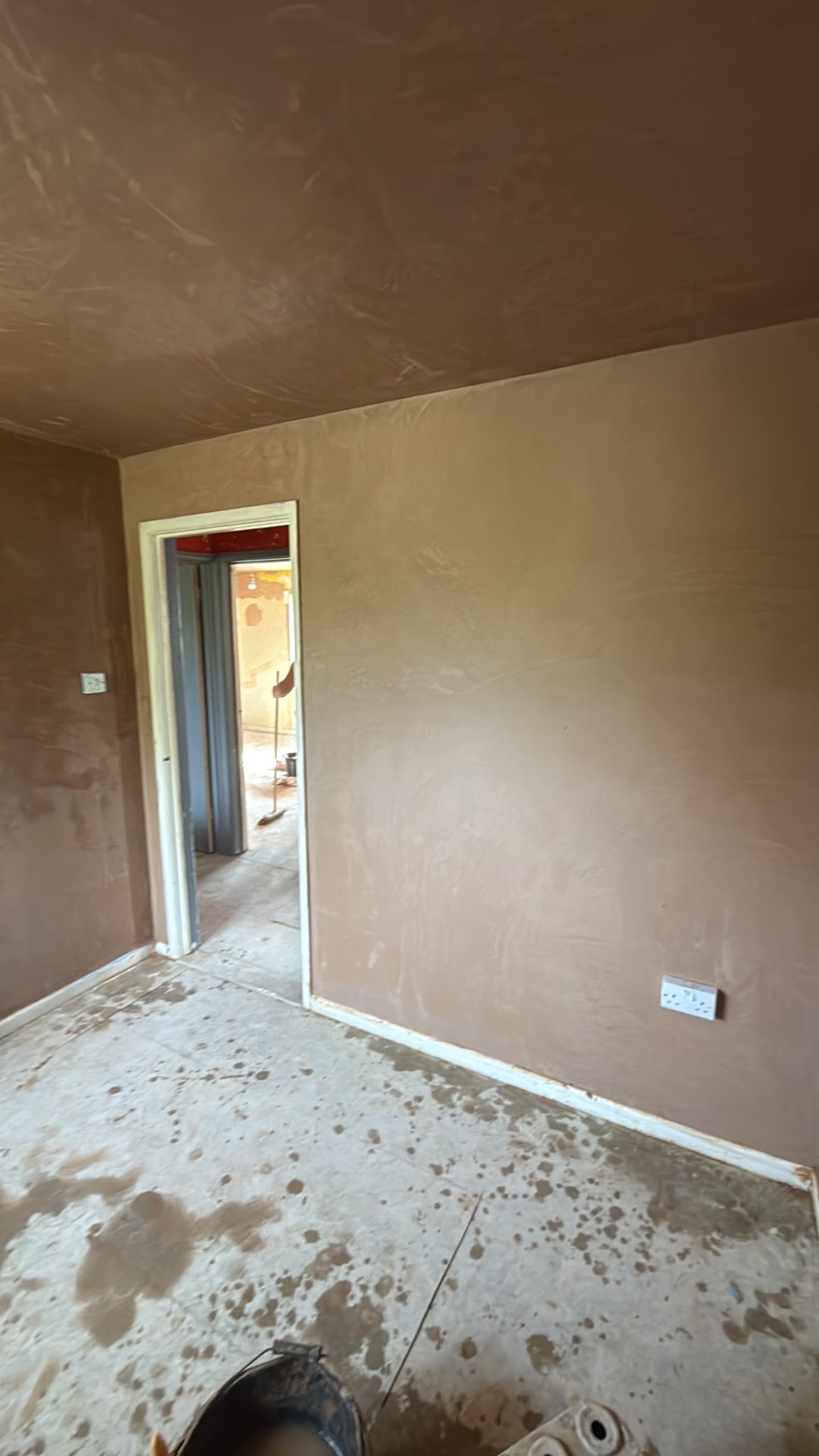
Why lime plaster is used on older buildings
Many older properties, particularly those built from solid masonry such as soft brick, cob, or stone, were originally designed to manage moisture by allowing it to pass through the wall and evaporate, a quality often described as breathability. Lime plaster is more permeable than modern gypsum or cement-based plasters, allowing moisture to move through the wall rather than becoming trapped behind a less permeable finish.
Applying modern gypsum plaster or cement render directly onto a wall that was designed around lime can sometimes interfere with how that wall manages moisture, which is one reason lime is often recommended for repair or re-plastering work on period properties, rather than simply replacing with whatever is already there without considering the original construction.
Assessing whether a property needs lime plaster
Not every older-looking property requires lime plaster, and not every lime plaster job is straightforward to justify from a technical standpoint. Suitability depends on the actual wall construction, the presence of existing lime plaster, and how the building has been altered over time, since some older properties have already had sections replastered in gypsum in the past without apparent issue.
A proper assessment looks at the existing wall build-up, any evidence of damp or plaster failure, and the building's construction and history before recommending lime over a modern alternative. Where there's uncertainty, particularly on a property of historical interest, it's worth getting that assessment done by someone with relevant experience rather than assuming lime is automatically the right or wrong choice.
Listed buildings and consent considerations
If a property is listed, changes to its internal or external fabric, including plastering work in some circumstances, may require Listed Building Consent from the local planning authority, particularly where original historic plaster or decorative plasterwork would be affected or removed. This is a legal requirement separate from any building regulations considerations, and carrying out unauthorised work on a listed building can have serious consequences.
Property owners with a listed or locally significant building should check with the relevant local planning authority, before any plastering work that could affect original fabric is agreed, and should be prepared for a longer lead time while that process is followed.
How lime plastering differs in process
Lime plaster behaves differently from gypsum in application and curing. It's typically applied in multiple thinner coats compared with the heavier base coats sometimes used with gypsum systems, and it carbonates (hardens through reaction with air) rather than setting chemically in the same way gypsum does, which generally means a slower, more gradual curing process.
This slower process means lime plastering jobs often need to be scheduled with more flexibility around drying and curing time between coats, and conditions such as temperature and humidity in the room can affect how the work progresses.
Preparing a property for lime plastering
Preparation includes removing any unsuitable modern coatings that may already be on the wall, such as cement render or gypsum skim, where these are found to be incompatible with the wall's original construction, and ensuring the background, whether old lath, masonry, or existing lime plaster, is sound enough to take new coats. Any damp issues affecting the wall should be identified and, where possible, addressed first, since lime plaster, while more forgiving of some moisture than gypsum, still performs best on a wall that isn't actively wet from an unresolved source such as a leaking gutter or failed damp-proof course.
If the wall has a textured coating already applied over it, that coating should be properly assessed before being disturbed, since older coatings can contain asbestos, and this applies regardless of whether the underlying plaster turns out to be lime or gypsum.
Getting a quotation for lime work
Because lime plastering depends heavily on the specific building's construction and condition, and because listed building considerations can affect timelines, quotations for lime work are based on an on-site assessment rather than a general estimate.
To discuss a lime plastering project on a period or listed property in Aldershot, call PlastererAldershot on 07881 365851.